You Won’t Believe What Makes Kas, Turkey’s Hidden Architecture So Insane
Tucked along Turkey’s sun-kissed Turquoise Coast, Kas isn’t just another pretty seaside town—it’s a visual storybook of stone, sea, and centuries-old charm. I wandered its cobbled lanes and stumbled upon architectural magic: pastel Ottoman houses clinging to cliffs, ancient Lycian tombs carved into mountainsides, and harbor-side buildings with wooden shutters that seem to whisper history. This is where old-world design meets coastal beauty in the most unexpected ways. Every corner reveals a harmony between human craftsmanship and natural landscape—a rare balance that feels both timeless and alive. Kas offers more than scenic views; it presents a living museum of architectural evolution shaped by climate, culture, and continuity.
First Glimpse: Arriving in Kas and the Immediate Architectural Wow Factor
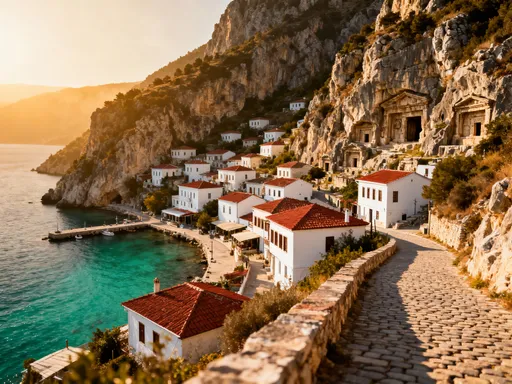
As visitors approach Kas from the coastal road winding west from Antalya or Fethiye, the first sight of the town cascading down terraced hills toward the shimmering Mediterranean is nothing short of breathtaking. The settlement appears almost suspended between sky and sea, with whitewashed buildings stacked like layers on a natural amphitheater. Red-tiled roofs catch the sunlight, while narrow stone pathways weave through clusters of homes, creating an organic pattern that defies rigid urban planning. This immediate visual impact stems not from modern design, but from centuries of adaptation to the rugged terrain.
The town’s elevation plays a crucial role in its architectural identity. Built on steep slopes, Kas naturally follows the contours of the land, allowing each level to offer panoramic views of the harbor and surrounding islands. This strategic positioning was not merely aesthetic—it served practical purposes long before tourism became a driving force. Higher elevations capture cooling sea breezes, reducing reliance on artificial ventilation, while the orientation of homes maximizes exposure to morning light and minimizes afternoon heat. Such thoughtful placement reflects a deep understanding of microclimates, a hallmark of traditional Mediterranean architecture.
What sets Kas apart from other coastal towns is how seamlessly the built environment integrates with nature. Unlike grid-based cities imposed upon landscapes, Kas grows outward and downward in response to the terrain. Staircases replace roads in many areas, and alleyways curve intuitively around rock outcrops rather than flattening them. This respect for topography results in a townscape that feels intimate and human-scaled. Every turn offers a new perspective—a glimpse of the sea between rooftops, a hidden courtyard behind an arched gateway, or a centuries-old doorway framed by climbing bougainvillea. The overall effect is one of discovery, where architecture does not dominate the landscape but converses with it.
Ottoman-Era Houses: Color, Craft, and Coastal Living
At the heart of Kas’s charm are its two- and three-story Ottoman-era houses, which line the upper streets and overlook the harbor. These structures, many dating back to the 18th and 19th centuries, showcase a distinctive blend of Anatolian craftsmanship and Aegean sensibility. Their most striking features include wooden overhanging balconies known as cumbas, intricately carved eaves, and brightly painted shutters in shades of turquoise, coral, and sage green. These homes stand on sturdy stone foundations, their upper floors projecting slightly over the narrow lanes below—a design element that once provided extra living space without encroaching on public pathways.
Beyond their visual appeal, these architectural details served functional roles shaped by climate and social norms. The cumbas, for instance, allowed residents to observe street life while remaining shaded and partially concealed—a subtle nod to privacy in a close-knit community. Large windows with operable shutters facilitated cross-ventilation, drawing in cool air from the sea while blocking direct sunlight. Interior courtyards, often centered around a well or small garden, acted as thermal regulators, creating pockets of cooler air that naturally circulated through adjacent rooms.
Construction materials were sourced locally, reinforcing sustainability long before the term entered common usage. Limestone quarried from nearby hills formed the load-bearing walls, offering excellent thermal mass that absorbed heat during the day and released it slowly at night. Timber, typically pine or cedar, was used for roof beams, floors, and balcony supports, chosen for its durability and resistance to salt-laden coastal winds. Lime-based plaster coated exterior walls, providing a breathable finish that resisted moisture buildup—a critical feature in a humid maritime environment.
Today, many of these homes have been carefully restored and repurposed as boutique guesthouses, art studios, or family residences. Preservation efforts focus on maintaining original elements such as hand-forged iron railings, traditional tile work, and wooden joinery. By honoring these details, Kas ensures that its architectural heritage remains not just visible, but lived-in—a testament to the enduring wisdom embedded in its historic homes.
Lycian Legacy: Rock-Cut Tombs and Ancient Urban Planning
Rising above the town, embedded into the pale limestone cliffs, are dozens of ancient rock-cut tombs left behind by the Lycian civilization, which flourished between the 5th century BCE and the Roman annexation in the 1st century BCE. These funerary monuments are among the most iconic features of Kas’s architectural landscape, blending seamlessly with the natural geology. Carved directly into vertical faces, they appear as if they emerged from the mountain itself—silent witnesses to a culture that revered both the afterlife and the permanence of stone.
The tombs vary in style, reflecting different periods and social statuses. The most common type resembles a Greek temple facade, complete with columns, pediments, and entablatures meticulously chiseled into the rock. Others take the form of sarcophagi perched on high ledges, their lid-like tops suggesting eternal rest. A third variation features barrel-vaulted chambers with arched entrances, resembling early domed structures. Their placement along ancient pathways indicates that they were meant to be seen—not hidden away, but integrated into daily life as reminders of ancestry and mortality.
What makes these tombs remarkable is not only their craftsmanship but their alignment with broader Lycian urban principles. The civilization was known for its decentralized city-states, advanced water management systems, and respect for individual autonomy—all mirrored in how their architecture interacted with the environment. Tombs were often positioned along trade routes or near settlements, reinforcing territorial claims and cultural identity. In Kas, this legacy persists: the tombs are not isolated relics but active participants in the town’s visual narrative, visible from homes, cafes, and hiking trails.
Modern visitors can hike the trails leading to these sites, gaining insight into how the Lycians engineered stability in challenging terrain. The precision of the carvings suggests sophisticated knowledge of stonework and geometry, while their elevated positions protected them from flooding and looting. Today, these tombs are protected under Turkish cultural heritage laws, ensuring their preservation for future generations. More than archaeological curiosities, they represent an early form of sustainable design—using natural materials, minimizing environmental disruption, and creating lasting monuments without depleting resources.
Harbor Architecture: Nostalgic Design Meets Modern Use
The heart of contemporary Kas beats along its picturesque harbor, where fishing boats bob beside yachts and waterfront cafes spill onto cobblestone quays. The buildings lining this area were originally constructed during the late Ottoman and early Republican periods, many serving as homes for Greek-speaking families before the population exchange between Greece and Turkey in the 1920s. Though their occupants changed, the architectural character remained, preserving a unique fusion of Aegean and Anatolian styles.
These harbor-side structures are typically one to two stories tall, with sea-facing windows, gently sloping roofs, and pastel-colored facades that reflect the Mediterranean light. Wooden doors and shutters, often painted in contrasting hues, add rhythm and warmth to the streetscape. Nautical influences appear in subtle details: rope-like moldings, porthole-shaped windows, and weathered timber beams that speak to a maritime way of life. Many buildings feature wide eaves that extend over sidewalks, offering shelter from both sun and occasional rain—a small but meaningful comfort in a coastal climate.
In recent decades, these historic buildings have undergone careful restoration to accommodate tourism without sacrificing authenticity. Former homes now operate as restaurants, boutique hotels, and craft shops, yet renovations prioritize the retention of original features. Thick stone walls remain exposed, vintage tiles are preserved or replicated, and rooftop terraces are designed to blend with the skyline rather than dominate it. Strict municipal guidelines govern exterior modifications, ensuring that new paint colors, signage, and lighting fixtures align with the town’s historic palette.
This adaptive reuse model has allowed Kas to thrive economically while maintaining its architectural integrity. Unlike resorts that erase history for uniformity, Kas embraces evolution within boundaries. A café may serve modern cuisine, but it does so beneath centuries-old wooden beams. A guesthouse may offer luxury amenities, yet its layout follows the original floor plan. This balance between function and preservation demonstrates how heritage can be dynamic rather than static—a living continuum rather than a frozen exhibit.
Urban Layout: Why Kas’s Streets Feel Like a Living Maze
One of the most enchanting aspects of Kas is its labyrinthine street network—a web of narrow, winding alleys that seem to twist and turn with purposeful unpredictability. Unlike planned cities laid out on grids, Kas evolved gradually over centuries, shaped by topography, social needs, and defensive considerations. The result is an urban fabric that feels intimate, exploratory, and deeply personal. Walking through its lanes is less like navigating a map and more like unfolding a story, one surprise at a time.
The organic growth of the town meant that streets followed natural contours, avoiding steep inclines and rocky obstacles. Steps replace roads in many areas, creating vertical circulation that connects different levels of the settlement. Arched passageways link parallel streets, offering shortcuts and moments of architectural delight. Hidden courtyards open unexpectedly behind unassuming doors, revealing quiet spaces for rest or reflection. This complexity was not accidental; it served practical purposes in earlier times, including shade provision, wind deflection, and protection from potential invaders.
Compared to other Mediterranean towns such as Santorini or Dubrovnik, Kas stands out for its lack of monumental fortifications and grand plazas. Instead, its charm lies in the everyday scale of its design. There are no wide boulevards or tourist-centric squares—just a mosaic of interconnected spaces that invite slow movement and close observation. This pedestrian-first layout fosters a sense of community, where neighbors greet each other across balconies and children play safely away from vehicle traffic.
Urban planners today study towns like Kas as models of sustainable, human-centered design. The density is high, yet the atmosphere remains airy and uncrowded due to strategic openings and view corridors. Buildings are close together, but courtyards and terraces provide private outdoor space. This balance of proximity and privacy reflects a deep understanding of social dynamics and environmental comfort—principles that modern cities often struggle to replicate. In Kas, the street is not just a path from one place to another; it is a stage for daily life.
Materials and Climate: How Nature Shapes the Town’s Look
The architectural identity of Kas is inseparable from the natural resources available in its region. Local stone, timber, and lime-based plasters are not stylistic choices—they are responses to environmental conditions shaped by necessity and refined over generations. The predominant use of pale limestone gives the town its signature glow, reflecting sunlight and reducing heat absorption. This same material, abundant in the surrounding hills, provides excellent insulation, keeping interiors cool in summer and warm in winter.
Wood plays a complementary role, primarily in structural elements and decorative features. Cedar and pine, resistant to rot and insect damage, are favored for beams, floors, and balcony supports. Their natural oils help withstand the corrosive effects of sea spray, extending the lifespan of wooden components. Over time, exposure to sun and salt air weathers the wood to a silvery gray, adding texture and depth to the townscape. This aging process is not hidden but celebrated, seen as a mark of authenticity and endurance.
Flat or gently sloped roofs are another adaptation to the local climate. While not as common as in desert regions, some buildings incorporate flat roofs designed to collect rainwater during the winter months. Stored in cisterns beneath courtyards or within homes, this water was historically used for household needs, reducing dependence on external sources. Shaded courtyards function as natural cooling chambers, where evaporative cooling and airflow create microclimates significantly cooler than outdoor temperatures.
Even the color palette of Kas has practical roots. Pastel shades—soft blues, warm ochres, mint greens—are not arbitrary trends but effective tools for thermal regulation. Light colors reflect sunlight, minimizing heat gain, while pigments derived from natural minerals resist fading. These finishes, often made with lime wash, allow walls to breathe, preventing moisture buildup that could lead to mold or structural decay. In every sense, the architecture of Kas embodies passive sustainability—designing with nature, not against it.
Preservation vs. Progress: How Kas Balances Modern Needs with Heritage
As tourism continues to grow along Turkey’s Turquoise Coast, Kas faces the delicate challenge of accommodating modern demands without compromising its architectural soul. Unlike nearby resort towns that have expanded rapidly with high-rise developments, Kas has implemented strict building regulations to protect its character. Height limits ensure that new constructions do not obstruct views or overshadow historic structures. Façade changes require approval from local heritage boards, preserving the consistency of materials, colors, and design elements.
Community involvement plays a vital role in these efforts. Local residents, many of whom have lived in Kas for generations, advocate for responsible development. Family-owned businesses often lead restoration projects, investing in long-term value rather than short-term profits. Nonprofit organizations and municipal programs offer guidance on sustainable renovation techniques, promoting the use of traditional methods alongside energy-efficient upgrades such as solar water heaters and insulated glazing.
Successful examples of this balanced approach abound. A former warehouse near the harbor was converted into a cultural center using original stone walls and reclaimed timber. A cluster of derelict homes in the upper quarter was rehabilitated into eco-friendly guesthouses, maintaining historic layouts while incorporating modern plumbing and insulation. These projects demonstrate that preservation and progress are not mutually exclusive—they can reinforce each other when guided by respect for place and history.
The result is a town that evolves without losing its essence. New buildings echo traditional forms, using sloped roofs, small windows, and local stone to blend seamlessly into the fabric. Public spaces are enhanced with native landscaping and pedestrian pathways, improving accessibility without altering the town’s scale. In doing so, Kas sets an example for heritage conservation in the 21st century—not as a museum piece, but as a living, breathing community that honors its past while embracing the future.
Kas, Turkey, is more than a beach escape—it’s a masterclass in architectural harmony. From ancient tombs to seaside homes, every structure tells a story of adaptation, beauty, and respect for place. As travelers, we don’t just visit these spaces—we feel them. And in preserving such towns, we safeguard not just buildings, but a way of living that time hasn’t forgotten. In an age of rapid urbanization and homogenized design, Kas reminds us that true beauty lies in continuity, craftsmanship, and the quiet wisdom of building with, not against, the land.