This Is Why Mendoza’s Food Scene Is Instagram Gold
You know that feeling when a place blows your expectations out of the water? Mendoza, Argentina, did exactly that—through its food. Beyond the vineyards and Andean views, the real magic happens on a plate: smoky empanadas, slow-grilled asado, and handmade pastas that taste like home—if your home were a five-star bodega. Every bite here is rich, bold, and yes, ridiculously photogenic. This is where flavor meets aesthetics in the most delicious way. More than just a backdrop for wine tourism, Mendoza has quietly built a culinary identity that thrives on authenticity, seasonality, and visual harmony. Whether captured under the golden haze of late afternoon or framed by rustic wooden tables in a family-run eatery, Mendoza’s food doesn’t just feed the body—it feeds the soul and the feed.
First Bite, Lasting Impression: Mendoza’s Culinary Identity
Mendoza is globally renowned for Malbec, but its food culture runs just as deep. Shaped by waves of Italian immigrants and rooted in Andean traditions, the region’s cuisine is a seamless blend of European technique and South American terroir. This fusion is not curated for tourists—it’s lived, daily, in home kitchens and neighborhood grills. The foundation of Mendoza’s food identity lies in its ingredients: tomatoes ripened under intense sun, herbs gathered from high-altitude slopes, free-range chickens, and grass-fed beef that grazes on mineral-rich pastures. These are not buzzwords—they are the everyday reality of what ends up on the plate.
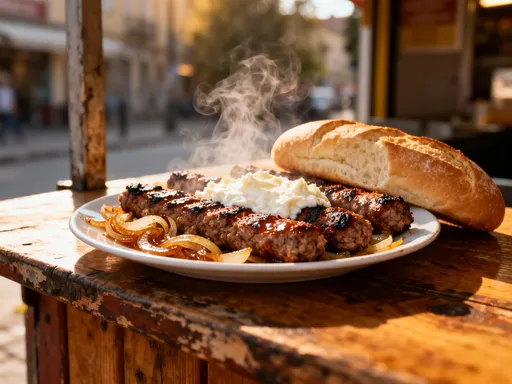
Walking into a traditional parrilla—a local barbecue house—feels like stepping into a sensory celebration. The air hums with the crackle of wood-fired grills, thick with the scent of smoke and sizzling fat. Waiters weave through crowded tables carrying platters piled high with chorizo, morcilla (blood sausage), and flank steak seared to perfection. The atmosphere is lively, unpretentious, and deeply communal. Laughter echoes between bites, wine flows freely, and meals unfold slowly, almost ceremonially. There’s no rush, no performance—just food, family, and presence.
What makes this experience so visually compelling is its authenticity. Unlike staged pop-ups or influencer-driven concepts, Mendoza’s food scenes emerge naturally. A basket of warm bread beside a crock of chimichurri, the charred crust of a grilled provoleta, or the steam rising from a bowl of locro—a hearty Andean stew—are not arranged for aesthetics; they simply are. And precisely because they aren’t forced, they photograph beautifully. The colors are vibrant because the ingredients are fresh. The textures are inviting because they’re real. This is not food as spectacle—it’s food as truth, and that honesty translates into powerful, shareable moments.
Markets That Tell Stories: Where Locals Eat and Snap
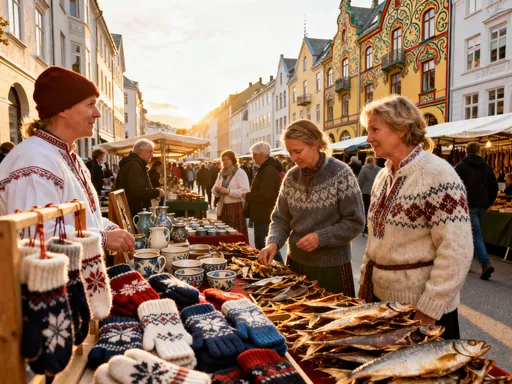
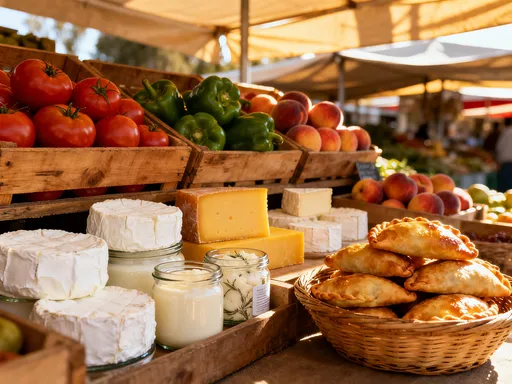
If Mendoza’s soul lives anywhere, it’s in its markets. The Mercado Central in Ciudad de Mendoza stands as the beating heart of local food culture—a place where farmers, artisans, and families converge daily. Open-air stalls burst with color: deep purple ulluco roots, baskets of golden quinoa, mounds of red peppers, and pyramids of sun-kissed peaches. Vendors proudly display wheels of queso mendocino, a semi-hard cow’s milk cheese with a nutty depth that reflects the region’s alpine pastures. Jars of dulce de membrillo—quince paste—glow like rubies next to honey harvested from mountain hives.
For visitors, the market isn’t just a place to eat—it’s a living gallery. The textures, contrasts, and organic arrangements create visual harmony that needs no editing. A close-up of wrinkled dried tomatoes beside a bundle of rosemary, the glistening surface of fresh goat cheese dusted with paprika, or the layered folds of handmade empanadas waiting to be baked—each detail tells a story of land, labor, and tradition. These are the images that stop scrolls, not because they’re filtered, but because they feel alive.
Timing matters. The best hours to visit are between 9 a.m. and 1 p.m., when stalls are fully stocked and vendors are most engaged. This is when you’ll find tamales mendocinos—steamed corn dough filled with shredded beef, olives, and hard-boiled eggs—wrapped in corn husks and served warm. Ask for one with a side of spicy salsa, and you’ll have a breakfast worth photographing. When taking photos, a simple rule applies: ask with your eyes first. A smile, a nod, or a quiet “¿Puedo tomar una foto?” goes a long way. Most vendors are proud of their craft and happy to share, especially if you buy something afterward.
The market also offers quiet moments of connection. Watch an elderly woman test the ripeness of a peach by scent alone, or a farmer explain how altitude affects honey flavor. These interactions, fleeting as they are, add depth to your experience—and your photos. A hand placing bread into a wicker basket, a child reaching for a sample of cheese, or sunlight filtering through a canvas awning—these are the candid shots that resonate most on social media, not because they’re perfect, but because they’re real.
From Vineyard to Table: The Rise of Food-Focused Bodegas
Wine has always defined Mendoza, but the region’s bodegas are evolving. No longer limited to tastings in barrel rooms, many now offer full culinary journeys where food and wine are equals. These are not add-ons—they are central to the experience. At family-run estates in Luján de Cuyo or the Uco Valley, long lunches unfold under vine-covered pergolas, where guests linger for hours over multiple courses paired with estate-grown varietals.
Imagine a plate of grilled octopus with smoked paprika oil, served alongside a crisp Torrontés. Or slow-cooked lamb al disco—a traditional method using a plow disc over an open fire—paired with a bold Malbec. These pairings are thoughtful, rooted in regional harmony. The food enhances the wine, and the wine elevates the food, creating a sensory loop that feels both indulgent and grounded. The settings amplify this: long wooden tables draped with linen, wildflowers in mason jars, views of snow-capped Andes stretching into the distance.
What makes these meals so photogenic is their effortless elegance. There’s no artificial staging—just thoughtful presentation born of respect for ingredients. A cheese board might include local goat cheese, quince paste, and rosemary crackers, arranged on a weathered wooden slab. The colors—creamy white, deep red, forest green—pop naturally against the rustic background. Sunlight dapples through leaves, casting soft shadows that add depth to every shot. Even the wine glasses catch the light, their rims tinged with violet from the Malbec within.
Sustainability adds another layer of appeal. Many bodegas now emphasize organic farming, dry cultivation, and solar energy. Some grow their own vegetables in on-site huertas (kitchens gardens), harvesting tomatoes, herbs, and squash just hours before serving. This farm-to-table ethos isn’t a marketing ploy—it’s a way of life. When you photograph a dish made with ingredients picked that morning, you’re capturing more than beauty; you’re documenting a philosophy.
Street Food with Soul (and Style)
Mendoza’s street food scene is where flavor and flair collide. From food trucks parked near plazas to weekend ferias in suburban neighborhoods, casual eats here are anything but ordinary. The star of the show? Empanadas de horno—baked, not fried—with golden, flaky crusts that crack open to reveal savory fillings of spiced beef, onions, and hard-boiled eggs. Each fold in the dough is a testament to craftsmanship, and the way they’re stacked in metal trays makes for a striking visual.
Another local favorite is the chivito, though not the sandwich found in Uruguay. In Mendoza, chivito refers to grilled goat meat, tender and slightly gamey, served on crusty bread with a flood of chimichurri. Topped with pickled red onions and fresh parsley, it’s a dish that bursts with color and flavor. Served from a food cart with a hand-painted sign, it becomes an instant photo subject—especially at golden hour, when the setting sun bathes the bread in warm light.
Weekend ferias are where street food becomes spectacle. In towns like Chacras de Coria or Maipú, entire blocks transform into open-air food festivals. Vendors sell everything from artisanal ice cream made with Andean berries to arepas stuffed with melted cheese and shredded chicken. The energy is festive, the scents intoxicating. Food is displayed with pride—no Styrofoam here. Wooden boards, clay plates, and linen napkins elevate even the simplest dish.
For photographers, these settings offer endless inspiration. Try a flat lay of empanadas beside a glass of red wine and a sprig of rosemary. Capture the steam rising from a freshly grilled choripán. Or focus on the vendor’s hands—dusted with flour, turning dough on a floured board. Just remember: portion sizes can be generous. Sharing is not just polite—it’s practical. And hygiene is generally good, especially at popular, high-turnover stands. Look for places with clear food handling practices and fresh ingredients on display.
Hidden Kitchens: Dining in Local Homes
One of Mendoza’s most intimate culinary experiences is comer en casa—eating in a local’s home. Through word-of-mouth or small booking platforms, travelers are invited into private kitchens for home-cooked meals that feel like family gatherings. These are not performances. There’s no script, no menu. Just a table set in a backyard, a fire crackling in a parrilla, and someone’s abuela rolling out gnocchi dough by hand.
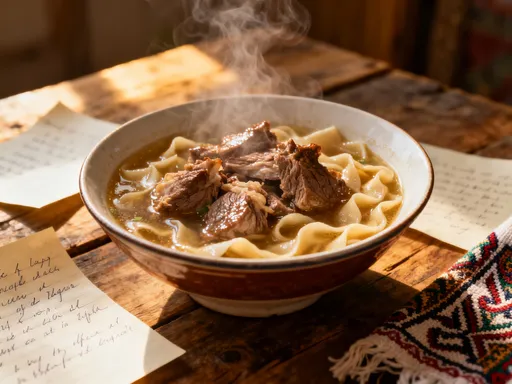
A typical evening might start with a glass of sparkling cider and a plate of sliced salami and cheese. Then comes the main event: a bubbling cazuela of locro, a bowl of handmade fideos (noodles) in rich beef broth, or a platter of grilled vegetables drizzled with olive oil. Wine flows freely, stories are shared, and guests are encouraged to help—whether stirring a pot, slicing bread, or toasting malbec with the host. The pace is slow, the mood warm, the food deeply satisfying.
What makes these moments so shareable is their authenticity. A photo of wrinkled hands shaping dough, a child sneaking a taste of sauce, or a dog curled up under the table—these are not posed. They’re spontaneous, human, and full of feeling. They capture not just what Mendoza tastes like, but what it feels like. And that emotional resonance is what makes content memorable.
Etiquette matters. Always bring a small gift—a bottle of wine, a box of chocolates, or flowers. Dress casually but respectfully. And be present: put the phone down between shots. These hosts aren’t performers—they’re sharing their lives. A genuine connection will always yield better photos than a perfectly lit still life. When you’re welcomed into someone’s home, the best image might not be the food at all—but the smile exchanged over a second glass of wine.
The Art of the Food Photo: Tips for Capturing Mendoza’s Flavors
Photographing Mendoza’s food doesn’t require expensive gear—just intention. Natural light is your greatest ally. Seek out tables near windows, under shaded patios, or in open-air markets where sunlight filters softly. Avoid harsh midday sun; instead, aim for early morning or late afternoon, when the light is warm and directional. This adds depth and dimension to your shots, making colors glow without washing them out.
Composition matters. Try shooting from above—a flat lay of a market spread, a wine tasting setup, or a street food platter. This perspective highlights color contrasts and arrangement. But don’t ignore eye-level shots: a close-up of molten cheese stretching from a fork, or steam rising from a bowl of soup, can be just as powerful. Include context: a hand placing bread on the table, a linen napkin, or a woven basket. These elements ground the image in place and culture.
Editing should enhance, not transform. Stick to warm tones that reflect Mendoza’s sun-drenched landscape. Slightly boost saturation to honor the vibrancy of fresh produce, but avoid oversharpening or artificial filters. The goal isn’t perfection—it’s truth. A slightly blurred shot of laughter around a dinner table may be more compelling than a technically flawless still life.
Most importantly, be respectful. Never take photos without permission, especially in private homes or small family-run eateries. Avoid staging scenes that distort reality. A dish doesn’t need to be rearranged to be beautiful. And remember: the best food photos aren’t taken—they’re earned, through presence, patience, and connection.
Beyond the Feed: Why Food in Mendoza Feels Meaningful
In an age of curated feeds and algorithm-driven content, Mendoza’s food scene stands out because it resists curation. Its beauty isn’t manufactured—it emerges from a deep connection to land, tradition, and community. The most memorable photos aren’t the most polished; they’re the ones that capture a moment of joy: a grandmother teaching a grandchild to roll pasta, a toast shared between strangers, a dog waiting patiently for a scrap of meat.
When you post a photo from Mendoza, you’re not just sharing what you ate—you’re sharing how you felt. The warmth of a wood-fired oven. The tang of fresh goat cheese. The sound of laughter over a shared bottle of wine. These are the details that make content meaningful. They remind us that food is more than fuel—it’s memory, identity, and connection.
Mendoza doesn’t need to chase trends to be Instagram-worthy. Its power lies in its authenticity. Every meal tells a story—of immigrants who brought pasta-making skills, of farmers who work the soil, of families who gather around the table. And when you capture that story, whether in a photo or in your heart, you become part of it. So take the picture. Share it. But don’t forget to put the phone down, take a bite, and savor the moment. Because in Mendoza, the best posts are born not from posing—but from presence.