You Won’t Believe What I Found Exploring Skopje’s Hidden Districts
Skopje isn’t just the capital of North Macedonia—it’s a city of layers, where ancient history meets bold modern statements. Wandering through its districts, I discovered neighborhoods that feel like different worlds, each with its own rhythm and charm. From the Ottoman echoes in Old Bazaar to the surprising art-filled corners of Čair, the city reveals itself slowly. This isn’t your typical European capital—this is raw, real, and surprisingly alive.
The Heartbeat of Skopje: Exploring the Old Bazaar (Stara Čaršija)
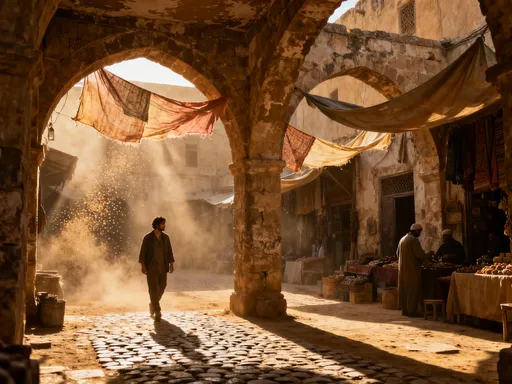
The Old Bazaar, or Stara Čaršija, stands as one of the oldest and largest surviving market complexes in the Balkans, stretching back over five centuries to the height of Ottoman influence in the region. Nestled along the eastern bank of the Vardar River, this labyrinth of cobblestone alleys and arched passageways pulses with life from dawn until late evening. Here, commerce, culture, and community converge in a way that feels both timeless and urgently present. Visitors are greeted by the scent of roasting coffee, the rhythmic tapping of coppersmiths shaping traditional jugs, and the soft call to prayer drifting from the Mustafa Pasha Mosque, a 15th-century gem perched on a hillside overlooking the market.
What makes the Old Bazaar the enduring soul of Skopje is not just its historical significance but its continued relevance in daily life. Unlike many historic markets turned tourist attractions, Stara Čaršija remains a working bazaar where locals shop for spices, textiles, and handmade leather goods. Artisans still practice age-old crafts—coppersmithing, filigree jewelry making, and carpet weaving—often in the same family-run shops that have operated for generations. The continuity of these traditions speaks to a deep cultural resilience, one that has weathered wars, earthquakes, and shifting political landscapes. In 1963, a devastating earthquake reduced much of Skopje to rubble, but the bazaar was painstakingly restored, preserving its architectural integrity while adapting to modern needs.
For travelers, navigating the Old Bazaar offers an immersive experience in sensory and cultural discovery. The best time to visit is early morning or late afternoon, when the summer heat softens and the golden light bathes the stone facades. Wandering without a map is encouraged—getting momentarily lost among the narrow lanes often leads to unexpected encounters, whether it’s a grandmother selling homemade ajvar from a wooden cart or a craftsman demonstrating the delicate art of copper engraving. Cafés tucked into quiet courtyards serve strong Turkish coffee in small brass cups, often accompanied by a piece of lokum, or Balkan delight, as a gesture of hospitality.
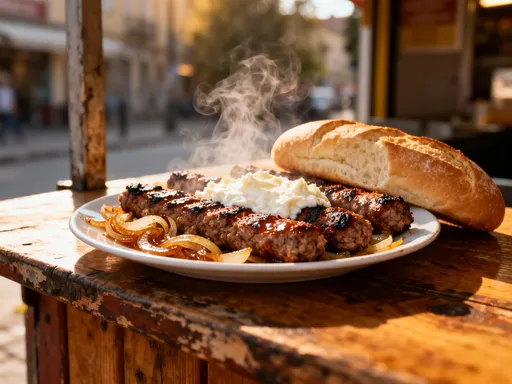
To experience the bazaar like a local, avoid the main entrance near the Stone Bridge, where tour groups tend to gather. Instead, enter from the south via Despodinova Street, where the pace is slower and the interactions more genuine. Seek out family-owned eateries like Čarši Tabija, where slow-cooked kebapi and freshly baked lepinja bread are served on checkered tablecloths under grapevines. Prices here are fair, and the food carries the warmth of home cooking. The Old Bazaar is not just a place to shop or sightsee—it’s a living archive of Skopje’s identity, where every alley tells a story and every interaction feels like a quiet invitation to belong.
Centar: Where Modern Skopje Comes Alive
If the Old Bazaar represents Skopje’s historical heart, Centar is its modern pulse—a planned urban core that emerged from the ashes of the 1963 earthquake with a vision of progress and renewal. Today, Centar serves as the city’s administrative, commercial, and social hub, anchored by Macedonia Street, a wide pedestrian boulevard that cuts through the district like a spine. Lined with neoclassical facades, boutique shops, and open-air cafés, this central artery draws locals and visitors alike, especially in the evenings when the outdoor seating fills with people sipping espresso and watching the world go by.
What makes Centar particularly striking is the presence of the Skopje 2014 project, a government-led urban renewal initiative that dramatically reshaped the city’s visual identity. This controversial undertaking introduced over 200 statues, monuments, and neoclassical buildings, including the massive Warrior on a Horse statue, widely believed to depict Alexander the Great, and the grandiose Porta Macedonia triumphal arch. While supporters argue that the project restored national pride and historical continuity, critics view it as an exercise in historical revisionism, with an overabundance of symbolism that feels more theatrical than authentic.
Yet, beyond the debate, Centar remains a place where everyday life unfolds with quiet dignity. Locals browse bookstores like Helikon, where Macedonian literature shares shelf space with European bestsellers. University students gather in cozy cafés such as Kafa Šarena, debating philosophy or sharing playlists over strong coffee. Public squares like Pella Square and the City Park provide green respites amid the stone and steel, hosting seasonal markets, open-air concerts, and children’s playgrounds. These spaces foster a sense of community that transcends the grand narratives etched in marble and bronze.
Walking through Centar, one senses a city trying to reconcile its past with its aspirations. The neoclassical buildings, though newly constructed, echo architectural styles that once graced European capitals, creating a sense of familiarity even for first-time visitors. Yet the district never feels sterile—life spills out from every doorway. Grandmothers sell sunflower seeds in paper cones, street musicians play accordion melodies near the fountain, and shopkeepers greet regulars by name. Centar may feel surreal at times, as if walking through a carefully curated stage set, but beneath the surface, it functions as a genuine urban center where culture, commerce, and conversation thrive.
Debar Maalo: Bohemian Vibes and Cultural Hubs
Perched on a gentle slope just west of the Vardar River, Debar Maalo has evolved from a quiet residential neighborhood into one of Skopje’s most vibrant cultural quarters. Once home to intellectuals, professors, and artists during the Yugoslav era, the district has reclaimed its bohemian spirit in recent years, becoming a magnet for young creatives, independent musicians, and contemporary art lovers. Its tree-lined streets are dotted with restored Austro-Hungarian and interwar-era villas, many of which now house art galleries, design studios, and intimate performance spaces.
The transformation of Debar Maalo reflects a broader shift in how Skopje’s residents engage with culture. Rather than relying solely on state-funded institutions, a grassroots movement has taken root, driven by collectives like the Student Cultural Center (SKC), which hosts poetry readings, experimental theater, and underground DJ sets. The center’s courtyard often buzzes with activity, where students and artists gather over cheap beer and homemade pastries, discussing everything from urban renewal to the future of Balkan cinema. Nearby, independent galleries such as Galerija 500 showcase works by emerging Macedonian artists, blending traditional motifs with modern abstraction.
One of the most captivating aspects of Debar Maalo is its street art. Unlike the grandiose sculptures of Centar, the murals here are raw, expressive, and often politically nuanced. A large-scale painting on the side of an old school building depicts a woman weaving a tapestry that morphs into the city skyline, symbolizing the interplay between heritage and progress. Another mural, near the corner of Partizanski Odredi and Debar Maalo Street, honors local musicians with vibrant, jazz-inspired figures mid-performance. These works are not commissioned by the city but emerge organically from community initiatives and artist residencies, giving the district an authentic, unpolished charm.
For travelers seeking experiences beyond the guidebook, Debar Maalo offers a refreshing alternative. Cafés like Kafa Toba and Barutana serve specialty coffee and craft cocktails in settings that blend vintage furniture with contemporary design. On weekends, pop-up markets appear in quiet courtyards, selling handmade ceramics, vintage clothing, and organic honey from nearby villages. The district’s appeal lies in its intimacy—its scale allows for serendipitous encounters, whether it’s striking up a conversation with a painter in their open studio or stumbling upon an impromptu acoustic set in a hidden garden. Debar Maalo is not just a place to visit; it’s a place to feel, to listen, and to be inspired.
Čair: A Mosaic of Communities and Daily Life
As one of Skopje’s most ethnically and culturally diverse municipalities, Čair offers a window into the city’s complex social fabric. Home to significant Albanian, Roma, and Turkish communities, this district defies easy categorization, thriving on its diversity rather than conforming to a single narrative. Unlike the curated aesthetics of Centar or the tourist-friendly charm of the Old Bazaar, Čair feels unapologetically real—a place where life unfolds in full color, sound, and motion. The district’s energy is palpable, especially in Bit Pazar, Skopje’s largest and most dynamic food market, where farmers from surrounding villages arrive before sunrise to sell fresh produce, herbs, and homemade dairy products.
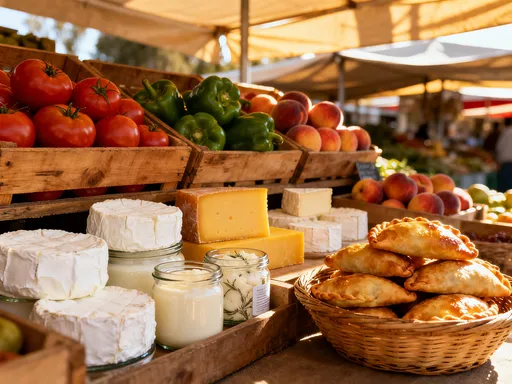
Walking through Bit Pazar is a feast for the senses. Stalls overflow with plump tomatoes, golden peppers, and bunches of wild mint. Vendors call out prices in Macedonian, Albanian, and Romani, reflecting the linguistic tapestry of the neighborhood. Shoppers—mostly women with reusable cloth bags—inspect every melon and eggplant with care, bargaining gently but firmly. The market is not just a place to buy food; it’s a social institution, where neighbors catch up, share recipes, and pass down culinary traditions. Here, one can find ajvar made the old way, simmered for hours over wood fires, or fresh kaymak, a rich, clotted cream often served with warm bread and honey.
Adjacent to the market, the district’s mosques, including the Isa Bey Mosque and the Čair Mosque, stand as centers of spiritual and community life. Built in the Ottoman period, these places of worship have been carefully maintained and continue to serve as gathering points for prayer, education, and social support. During Ramadan, the evening iftar meals bring families together in communal solidarity, often followed by night markets that extend the day’s vibrancy into the late hours. Community-led initiatives, such as youth tutoring programs and women’s cooperatives, operate quietly but effectively, strengthening social bonds and fostering resilience.
Čair’s identity is not without challenges. Like many diverse urban areas, it faces issues related to infrastructure, education access, and economic opportunity. Yet, what stands out is the strength of its community networks. Local leaders, often working without significant funding, organize clean-up campaigns, cultural festivals, and interfaith dialogues to promote unity. For visitors, approaching Čair with respect and curiosity is essential. Rather than viewing it through a lens of exoticism or pity, the district invites a deeper understanding—one that recognizes dignity, agency, and cultural pride. A simple cup of coffee shared in a family-run café can open doors to conversations that transcend language and background.
Karpoš and Šuto Orizari: Suburbs with Stories to Tell
Beyond the central districts, Skopje’s suburban neighborhoods reveal another dimension of urban life—one defined by routine, resilience, and community. Karpoš, a sprawling municipality in the eastern part of the city, exemplifies middle-class Skopje. With its mix of apartment blocks, green parks, and neighborhood schools, it is a popular choice for families, young professionals, and retirees. Tree-lined avenues like Partizanski Odredi and Gjorče Petrov connect residential zones with shopping centers, pharmacies, and public transportation hubs, creating a functional, livable environment. On weekends, parents push strollers through Park Karpoš, while teenagers gather at local bakeries, sharing slices of burek and cans of Fanta.
What distinguishes Karpoš is its balance between urban convenience and neighborhood intimacy. Unlike the high-density cores, it offers space—both physical and social. Community centers host dance classes, language workshops, and senior gatherings, fostering a sense of belonging. Local markets, though smaller than Bit Pazar, provide fresh produce and household goods at affordable prices. Public transportation, including buses and the recently expanded trolleybus network, ensures connectivity to the city center, making Karpoš a practical choice for those who work downtown but prefer a quieter home life.
Just north of Karpoš lies Šuto Orizari, a district with a unique and important place in Skopje’s social landscape. Often referred to as Šutka, it is one of the few municipalities in Europe with a Roma majority population and holds official recognition as a cultural and administrative center for the Roma community in North Macedonia. Unlike the stereotypes often associated with Roma settlements, Šuto Orizari is a place of organization, creativity, and civic engagement. It has its own local government, schools, and cultural institutions, including the Roma National Theater, which stages performances in Romani and promotes traditional music and storytelling.
Life in Šuto Orizari is shaped by both challenges and strengths. While the district has historically faced marginalization and underinvestment, recent years have seen growing efforts to improve infrastructure, expand educational programs, and support local entrepreneurship. Women’s cooperatives produce handmade textiles and jewelry, which are sold at cultural fairs and online. Youth groups use music and dance to express identity and advocate for inclusion. Visitors are not common, but those who come with genuine interest are often welcomed into community events, especially during festivals like Ederlezi, a spring celebration marked by music, food, and colorful processions. Šuto Orizari reminds us that every neighborhood, no matter how overlooked, carries stories worth hearing.
Crossing the Vardar: Bridges as Connectors and Symbols
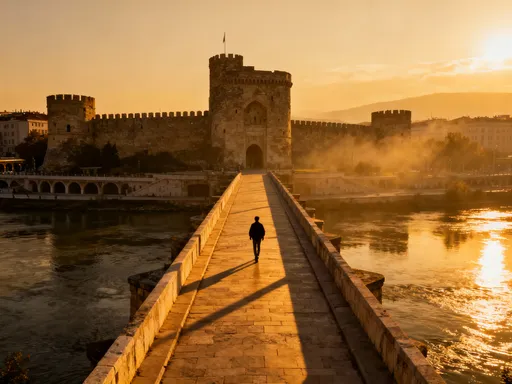
The Vardar River flows through Skopje like a silver thread, dividing the city into eastern and western banks while also serving as a unifying force. It is not the river itself that defines the city’s rhythm, but the bridges that span it—structures that are more than mere transit points. They are arteries of movement, symbols of connection, and canvases for public art. The most iconic of these is the Stone Bridge, a 15th-century Ottoman construction that links the Old Bazaar to Macedonia Square. Walking across it at sunrise, with the city still wrapped in morning mist, feels like stepping between two worlds—one rooted in centuries of tradition, the other reaching toward a modern future.
The Stone Bridge is more than a historical monument; it is a living part of daily life. Commuters cross it on foot, students pause to take photos, and couples linger at its center, attaching love locks to the railings. At night, it is illuminated in soft gold, casting rippling reflections on the water below. Nearby, the newer Art Bridge and the Memorial Bridge are adorned with sculptures of musicians, writers, and dancers, celebrating Skopje’s cultural heritage. These figures, cast in bronze, seem to gaze across the river, as if watching over the city’s evolution.
Yet, the bridges also reflect deeper narratives about identity and integration. The physical act of crossing from Centar to the Old Bazaar, or from Karpoš to Čair, mirrors the social and cultural journeys that Skopje’s residents navigate every day. The city’s divisions—historical, ethnic, economic—are real, but so are the efforts to bridge them. Public art projects, cross-community festivals, and urban planning initiatives aim to foster inclusivity and shared ownership of public space. The river does not erase differences, but the bridges offer pathways toward understanding.
One of the most powerful symbolic crossings is the Millennium Cross atop Mount Vodno, accessible via a cable car from the southern edge of the city. While not a river bridge, this massive structure—visible from nearly every district—serves as a spiritual and visual anchor. For many, it represents faith and continuity; for others, it is a reminder of the complex relationship between religion and national identity. Regardless of interpretation, its presence encourages reflection. From its vantage point, one can see the entire city spread below—the red-tiled roofs of the Old Bazaar, the glittering domes of Centar, the quiet hills of Debar Maalo—all connected by the winding ribbon of the Vardar. The view reminds us that Skopje, for all its contrasts, is one city, shaped by many hands and hearts.
Why Skopje’s Districts Matter: A City Beyond First Impressions
To understand Skopje is not to check off a list of landmarks but to wander, observe, and listen. Each district—whether bustling, quiet, historic, or modern—contributes to a mosaic that defies simple categorization. The city’s true character lies not in its monuments or marketing campaigns but in the everyday lives of its people: the baker kneading dough at 5 a.m., the student sketching in a café notebook, the grandmother bargaining for peppers at the market. These moments, small and unscripted, form the fabric of Skopje’s identity.
What makes the city remarkable is its willingness to hold contradictions. It embraces ancient traditions while experimenting with contemporary expression. It grapples with questions of identity and memory without always resolving them. It welcomes visitors not as passive observers but as participants in an ongoing story. To explore Skopje mindfully is to move beyond postcard views and engage with its complexity—its beauty, its imperfections, its resilience.
Travelers are invited to do more than see; they are encouraged to support local artisans, dine in family-run restaurants, and ask questions with humility. By doing so, they contribute to a form of tourism that respects dignity and fosters connection. Skopje does not offer easy answers, but it offers something more valuable: authenticity. In a world of curated experiences, this city remains refreshingly unpolished, alive with the pulse of real life. To walk its streets is to remember that every city, like every person, has layers—and the deepest ones are always worth discovering.